Het Pavlodar-fenomeen: Hoe aardappelen de landbouw in Kazachstan veranderen
Speciale rapport van de International Aardappel Tour: Pavlodar Regio, Kazachstan
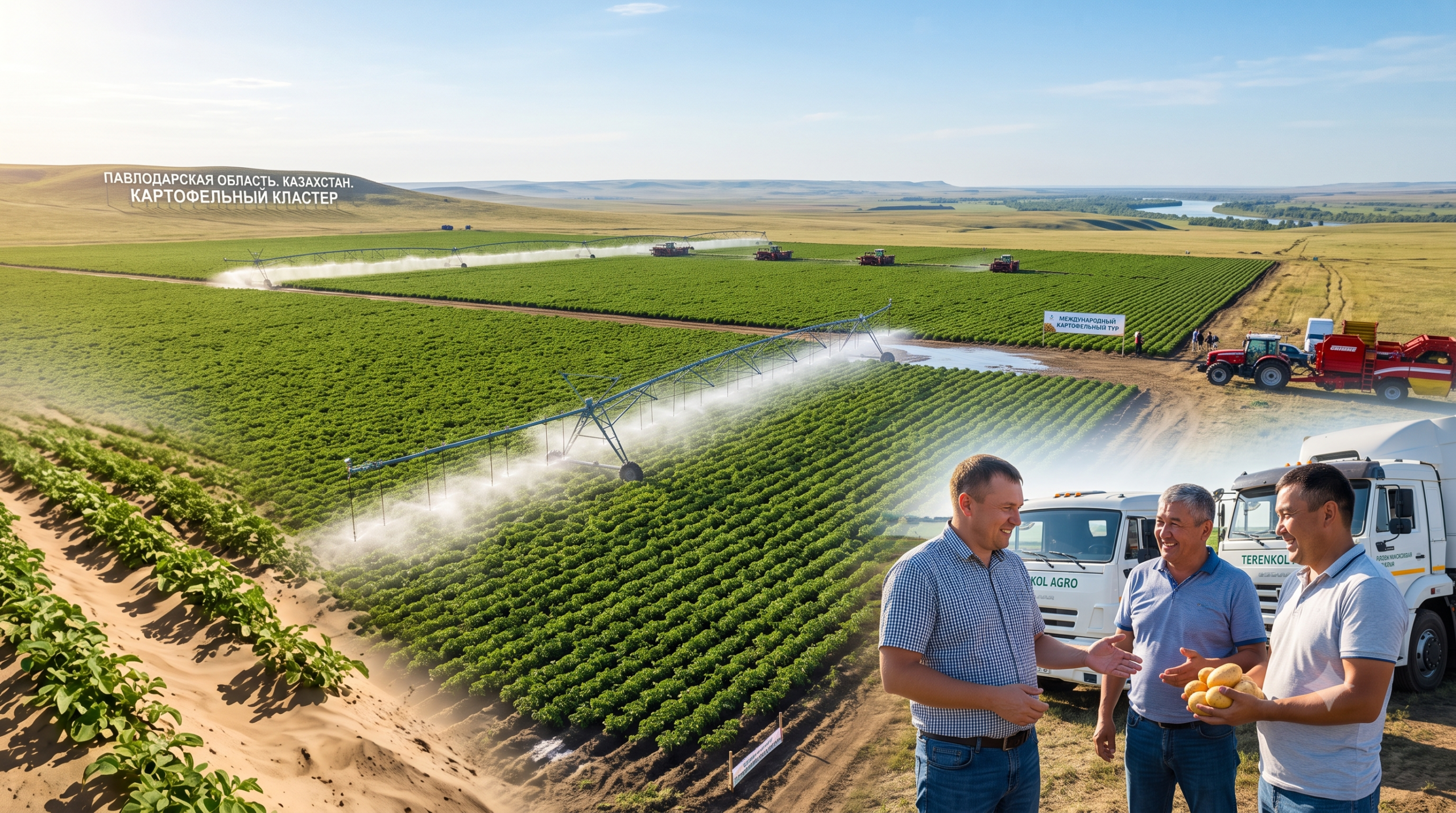
Vandaag is de Pavlodar-regio een van de belangrijkste aardappelgroeiclusters in Kazachstan. Als onderdeel van onze International Aardappel Tour hebben we de districten Zhelezinsky en Terenkolsky bezocht om uit de eerste hand te zien hoe lokale boeren recordopbrengsten oogsten op zandige bodems te midden van abnormale hitte en grondstoffentekorten. Zij leveren het “tweede brood” niet alleen voor hun eigen regio, maar ook voor de hoofdstad, terwijl ze hun producten exporteren naar zuidelijke landen.
Sand and Sun: Perfect Washing and Harsh Dunes


The specifics of potato farming in this region are dictated by nature itself. The local soils are predominantly sandy. On one hand, this is an undeniable advantage during the harvest.
“Als er geen regen is tijdens de oogst, komen onze aardappelen perfect schoon uit, alsof ze rechtstreeks uit de wasmachine komen,” deelt Dmitry Kozinets, hoofd van de “Terenkol Agro” boerenbedrijf, die overgestapt is naar de landbouw vanuit de transportsector in 2017.
However, sand has its dark side—severe wind erosion. Timur Kabdulov, head of the “KAP” peasant farm, who cultivates 550 hectares of potatoes, talks about battling the elements:
“We have terrible wind erosion here. If you make a classic fallow land with soil cultivation, dunes 50 centimeters high grow right at the end of the fields. Therefore, I try not to touch the soil; I use chemicals and sow oats to secure the topsoil.”
De tweede uitdaging is het klimaat. Abnormale hitte (over 30°C voor een maand) vereist continue irrigatie. Boeren pompen 15-20 mm water, en de irrigatiemachines stoppen nooit een minuut.
From Grain to Vegetables: Economics and Profit Margins
It is interesting to observe how the profile of the farms is changing. Many managers and agronomists were staunch “grain growers” in the past. What makes them switch to vegetables? The answer is simple: economics.
For large livestock complexes, potatoes become a financial cushion. Nikolay, an agronomist at a young farm with 5,000 heads of cattle, explains this strategy:
“Het verbouwen van veevoeder in onze niet-gebewaterde (bagara) zone is zeer moeilijk. We hebben geïrrigeerde percelen geïntroduceerd, reservoirs gebouwd en putten geboord tot 850 meter diepte. Dit zijn enorme geleende fondsen. Het kost veel tijd voordat het veevoeder groeit en de koe melk geeft. Maar aardappelen en wortelen betekenen direct geld. We verbouwen ze, verkopen ze, en in hetzelfde jaar hebben we werkkapitaal om onze schulden af te lossen.”
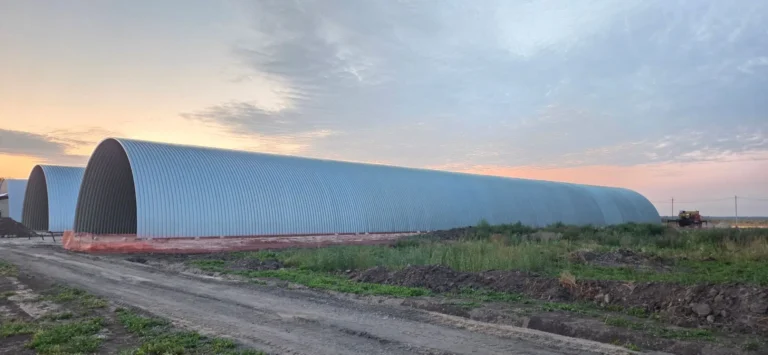
The entry barrier to this business is high today. According to Dmitry Kozinets, with the capital he started with 9 years ago (buying an old Soviet DDA sprinkler system), he could only manage about 10 hectares today. Now, farmers use modern frontal and pivot machines, powerful equipment (such as Grimme), and build state-of-the-art vegetable storages with government support (subsidies for storage facilities are about 800,000 tenge per ton, and up to 30% for elite seeds).
De onbetwiste leider: Gala-variëteit
There is a monopoly of one variety in the fields of the Pavlodar region. The vast majority of farms rely on the Gala variety. The reasons are pragmatic: excellent keeping quality, stable yield, and high market demand. Experiments with red varieties show that local clients and buyers from Uzbekistan (the main export destination) prefer yellow potatoes.
Farmers try to purchase seeds of the highest reproduction (elite seeds are even imported from Germany) and propagate them on their farms, providing themselves with excellent quality planting material for several years ahead without losing yield.
Agronomy: The Battle for Tuber Health
De aardappelgewas vraagt enorme aandacht. Eldar Usmanov, een agronoom bij “Astyk PV” LLP (2,500 hectare onder irrigatie), vergelijkt zijn werk met geneeskunde:
“A potato is like a living creature. It needs a lot of attention; you have to constantly monitor it. The plant is alive, and we are its doctors. We must ensure that it stays healthy.”
And there is plenty to treat. Under intensive irrigation, farmers face a complex of diseases:
- Rhizoctoniosis (black scurf): Een van de belangrijkste problemen op lichte bodems, waardoor scheuren in de knollen ontstaan. De bestrijding gebeurt door moderne fungiciden (azoxystrobin, fludioxonil) direct tijdens het zaaien toe te passen.
- Alternariosis (early blight): Appears during heat stress, starting in late June.
- Late Blight (Phytophthora): Although not an annual disaster, it keeps farmers on high alert. The number of preventive treatments in some farms has grown from 2 to 8-9 per season.
- Plagen: Nematoden en draadwormen vereisen ook aanpassingen in de vruchtwisseling en het gebruik van insecticiden (bijv. fipronil).
Het voedingsschema is eveneens intensief. Indrukwekkende doses worden op de grond aangebracht vóór het planten en hillen: 500 kg diammoniumfosfaat (DAP), kaliumchloride en sulfaat, en salpeter.
Infrastructural Barriers: Water and Electricity
The main obstacle to the development of irrigated agriculture in the region today is not a lack of land or equipment, but an electricity shortage.
According to Eldar Usmanov, when the active irrigation season begins and neighboring large farms simultaneously turn on dozens of pumping stations, there is a catastrophic lack of voltage in the grid.
The second problem is access to water. Farms located far from the Irtysh River (up to 150 km) have to drill ultra-deep wells (up to 850 m) with low yields (only 20 l/s) and build huge storage ponds, which requires massive investments.
The Human Factor
Ondanks de hitte, zandstormen, plantenziekten en stroomonderbrekingen zijn de mensen die hier werken echt gepassioneerd over wat ze doen. De meeste boerderijen zijn familiebezit, waar ervaring van vader op kind wordt doorgegeven, en taken duidelijk verdeeld zijn tussen broers en zussen (bijvoorbeeld op de “Kundyz” boerenboerderij, die is uitgegroeid van 40 hectare in 1993 tot 15,000 hectare vandaag).
When asked what gives them strength when they feel like giving up, the farmers unanimously answer: the support of their families, love for their work, and, of course, the magic of the result.
“Het leukste voor mij is het oogstproces,” samenvat agronoom Nikolay. “Wanneer je ziet wat je gedurende het seizoen hebt geteeld, en je oogst het, voel je vreugde in je hart wanneer alles goed is verlopen en soepel verloopt.”